
Otero County Police Blotter Sources
Otero County publishes no countywide booking log covering the past 72 hours or seven days. The closest sheriff source is the Otero County Sheriff Office Blotter & News Events & Pictures page. Its visible archive holds little beyond a 2016 information item. That page states no coverage window, no upload schedule, or photo practice. It lists no archive depth either. Treat it as news, not a current jail blotter. Alamogordo Police adds the more useful multi-day layer. Its weekly PDFs cover date ranges and summarize major activity, including some arrests. But Alamogordo is only one jurisdiction, and APD itself says the files skip many calls. The Otero County Sheriff's Office keeps its own records. So do Tularosa Police, Cloudcroft Police, state officers, and other partners.
Read Otero Arrest Reports by Week
The official APD activity-log archive sorts reports by a stated date range. Go by the incident date, not the day you found the PDF. An older file can still document an Otero arrest even after custody ended long ago.
- Open the year and weekly date range that includes the reported event.
- Search the PDF for a full name, case number, street, or arrest date.
- Read the entire narrative. Note the arresting agency, alleged offense, warrant basis, court, release action, or OCDC transport if stated.
- Check adjacent weeks when an incident fell near a reporting boundary or was summarized later.
- Confirm present custody with OCDC and follow the named court for disposition.
The official archive capture shows how APD organizes its dated reports.
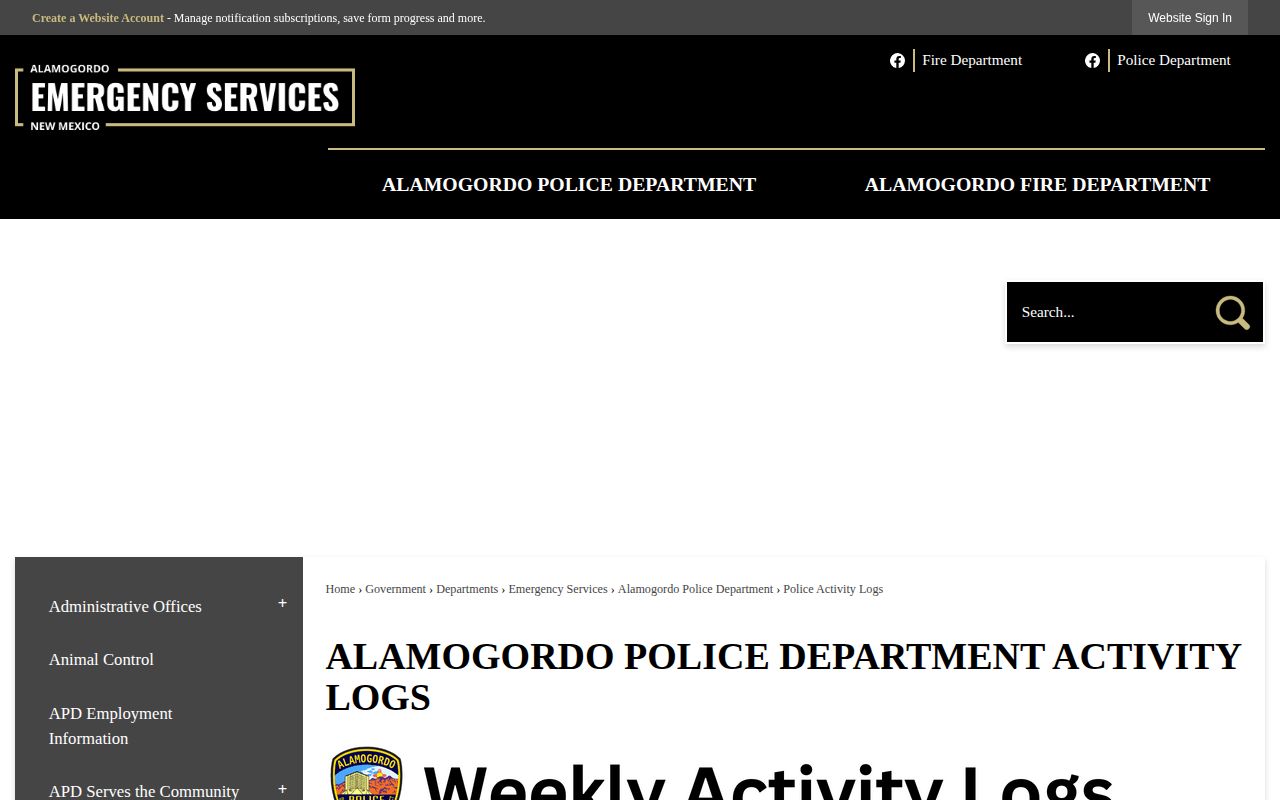
This index offers a longer historical trail than any one-day view. Still, it remains an APD major-activity summary rather than a live OCDC custody roster.
Otero Arrest Log Entry Fields
Fields vary by incident. APD writes narratives, so its reports do not read like uniform booking cards. The table separates what an included APD entry may hold from what requires a check elsewhere.
| Field | How to interpret it |
|---|---|
| Name and date | May identify an arrested person and incident date in selected major activity. |
| Narrative | Explains the reported event; it is not a judicial finding. |
| Charge or warrant reason | States the charge or basis described when the log was prepared. |
| Case number | Useful when requesting the completed agency report. |
| Court or release action | May name a court, release on recognizance, bond, or another immediate step. |
| OCDC transport | Shows transport or incarceration when stated, not current custody today. |
| Booking photo | No routine APD weekly-log photo policy was documented. |
Arraignment is an early court appearance where charges and release conditions get addressed. Disposition means the final result. That could be dismissal, acquittal, diversion, plea, conviction, or another resolution. Neither can be inferred from one blotter sentence. A warrant reference also needs care. A warrant is a court order authorizing an arrest. A bench warrant usually follows a missed court duty or similar case event. The short police narrative rarely carries the full warrant history. Use the case number and named court to find later entries. Ask the clerk for documents when the public lookup shows only a summary. That extra step pays off. It keeps an old weekly report from being mistaken for a person's present legal status.
Otero Weekend Arrest Posting Limits
APD promises no exact upload hour. There is no automatic refresh and no stated weekend or holiday practice for its weekly reports. OCDC posts no same-day web feed either. So a Monday search cannot stand in for a complete Friday-through-Sunday list. Reports run on a weekly cycle. Some events fall outside the major-activity selection. Another agency may hold the source report. For an urgent custody question, call OCDC at 575-437-6420. The Arrests Last 24 Hours page lays out the same-day confirmation route. If the issue is paperwork, contact the arresting agency or file a focused public-record request. A court search can help once a case opens. But filing time and access limits can leave a very recent matter absent.
Otero Blotter Archives and Records
The APD page lists recent years alongside older weekly documents. It reaches further than a rolling short window. It promises no permanent archive, though. It says nothing about when a PDF might come down. The sheriff press archive publishes no roll-off policy either. When asking an agency for a completed report, save the file date. Keep the report title and any case number too. County records move through the Otero County IPRA process. Name the agency, the person, the event date, the approximate arrest time, and the item you want. APD records follow a separate city request route, not county IPRA. Keep the city's documented copy charge and the county's fee schedule apart as well. Retention also differs from web display. The State Records Center marks older sheriff schedules as reference material. It points to a current functional schedule. An old five-year reference period guarantees neither online access nor destruction on a date. Ask the custodian for the current record class, trigger event, disposition status, and any archive transfer details. Note: A weekly PDF can stay online after release. A current-custody answer can change without altering the historical police report.
Otero Arrest News Recaps
Local news can help you pin down a date range or spot the official agency source. But it ranks behind government records. Alamogordo News published an APD-sourced arrest roundup, an editorial summary with its own publication date. It is not a live Otero County custody source.
Local outlets add a second layer to Otero County arrest coverage. 2nd Life Media published an APD arrest report, drawing from Alamogordo police logs. Its recaps help decode abbreviations. They also bundle a week of activity. Still, jail custody status can change faster than a news story, so confirm names and outcomes with APD, OCDC, or the court docket.

Cloudcroft Reader covers incidents for the mountain village as they happen. It is not a county arrest list. The pace is irregular, since village news drives it. Regional crime desks handle major Otero County events too. Their picks follow news value. A complete booking window never guides them, so gaps are normal. For a solid answer, start with the agency record, use reporting for context, and check the court docket for the outcome.